To genuinely get a handle on churn, SaaS businesses have to stop putting out fires and start preventing them. This means moving from reactive fixes to a proactive, data-driven strategy. The secret is using predictive analytics to spot customers who are drifting away before they hit the cancel button, giving you a real chance to intervene and protect your Monthly Recurring Revenue (MRR).
Why Proactive Churn Reduction Is Your Best Growth Lever
Let's be real for a moment. Even a small, seemingly harmless churn rate is silently killing your growth. For far too long, SaaS founders have treated churn like a cost of doing business they just have to accept. We've all been there, relying on exit surveys and last-minute "please don't go!" discount offers. But these tactics are almost always too little, too late. The customer has already checked out mentally.
A modern approach completely reframes churn. It's not a lagging indicator of past problems; it's a solvable issue you can get ahead of today. Instead of waiting for the cancellation email to land, a proactive strategy uses data to see the future.
The Silent Killer of SaaS Growth
In the world of SaaS, where everything hinges on recurring revenue, a modest monthly churn rate of 5% can wipe out nearly half (46%) of your customer base in a single year. It's a quiet but deadly problem that turns a manageable metric into a major growth blocker.
This isn't just a theoretical problem. For a startup hitting $100K MRR, that 5% monthly churn translates into a staggering $46,000 in lost revenue annually.
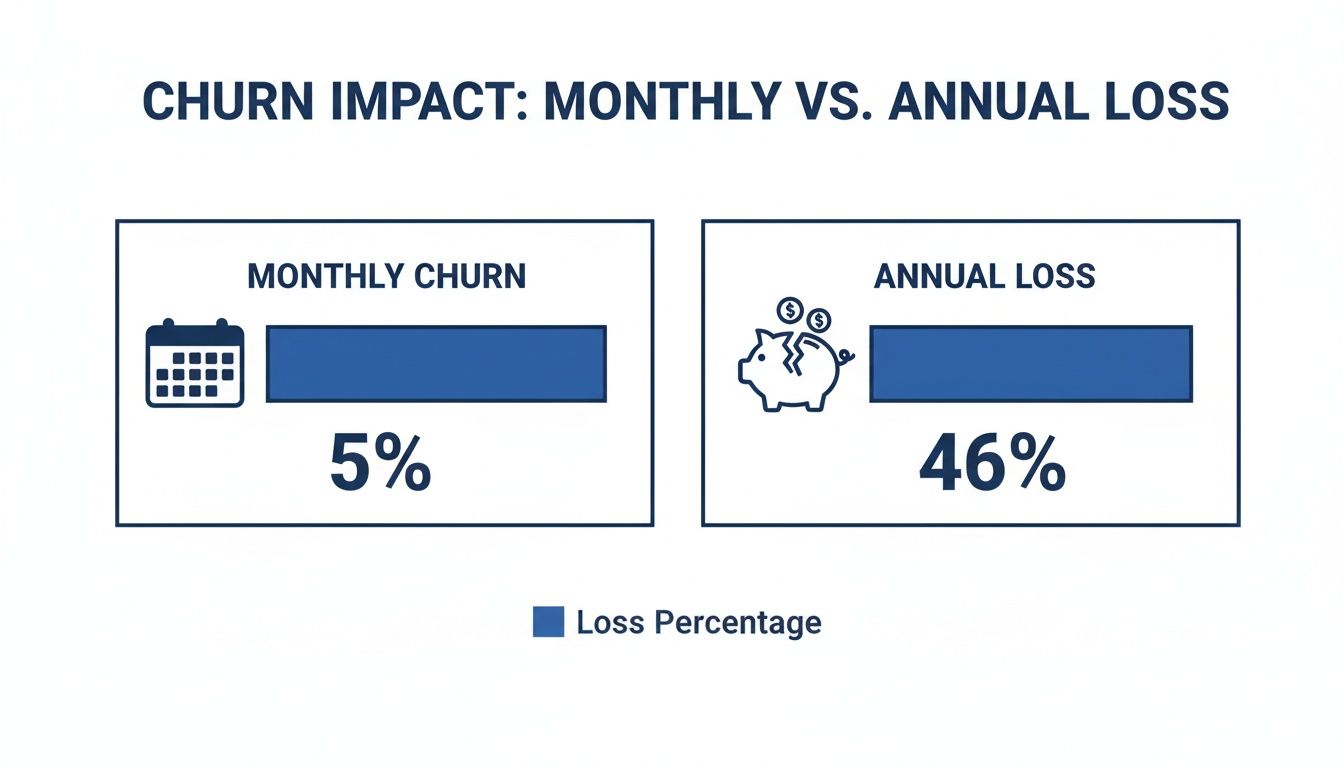
As you can see, what feels like a minor monthly leak quickly becomes a massive flood over the year, washing away a huge chunk of your hard-won customer base.
Let's break down how even small percentages add up to create a significant drag on your growth.
The Compounding Impact of Monthly Churn on Annual Revenue
This table illustrates how seemingly small monthly churn rates translate into significant annual customer and revenue loss, highlighting the urgency of proactive retention.
| Monthly Churn Rate | Annual Customer Loss | Impact on $100K MRR Business (Annual Loss) |
|---|---|---|
| 1% | 11.4% | $11,400 |
| 3% | 30.6% | $30,600 |
| 5% | 46.0% | $46,000 |
| 8% | 65.2% | $65,200 |
The numbers don't lie. The cumulative effect is what really hurts, making it clear that getting ahead of churn is non-negotiable for sustainable growth.
From Guesswork To Predictive Action
The real challenge for founders is protecting MRR without sinking all their time and resources into it. A proactive approach flips this challenge into an opportunity by creating an early warning system. By analyzing subtle behavioral signals—like a drop in login frequency, a change in feature usage, or fewer support tickets—you can flag at-risk accounts weeks before they even think about leaving.
A proactive retention strategy is your most powerful growth lever. It's far more cost-effective to save an existing customer than to acquire a new one, turning your retention efforts directly into profit.
This is where purpose-built tools that integrate with Stripe, like LowChurn, come into play. They connect directly to your subscription data and turn those raw signals into actionable revenue recovery campaigns. This empowers even small teams to act decisively. Instead of guessing who might leave, you get a prioritized list of at-risk customers and the playbooks to re-engage them.
For a deeper dive into different methods, you can learn more about how to reduce customer churn effectively. Ultimately, this shift in mindset makes churn reduction the single most effective way to grow your business.
Laying the Groundwork for Accurate Churn Measurement
You can't fix what you can't measure. It’s an old cliché, but when it comes to churn, it's the absolute truth. Before you start building out elaborate retention campaigns, you have to get your measurement right. This means establishing a single source of truth for your churn data—one that gives you a real-time pulse on the health of your business without getting bogged down in messy spreadsheets.
Too many SaaS businesses make the mistake of tracking only one type of churn, and that gives them a dangerously incomplete picture. To really get a handle on customer attrition, you need to look at it from two different angles.
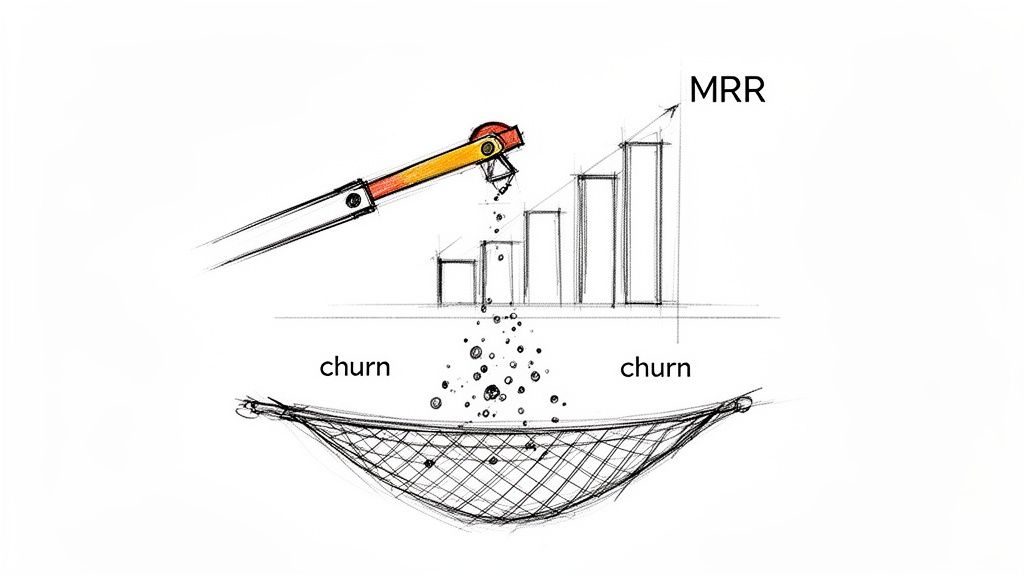
Customer Churn vs. Revenue Churn
It’s absolutely critical to understand the two sides of the churn coin. They tell very different stories, and focusing on one while ignoring the other can send you chasing the wrong problems.
Customer Churn (Logo Churn): This is the straightforward one. It's the percentage of customers who cancel their subscriptions in a given period. If you start the month with 100 customers and lose 5, your customer churn rate is 5%. Simple enough.
Revenue Churn (MRR Churn): This is where things get more interesting. This metric tracks the percentage of monthly recurring revenue (MRR) you've lost from existing customers. It includes revenue lost from full-on cancellations and from customers downgrading to cheaper plans.
Think about it this way: you lose ten customers on your $19/month plan and one enterprise customer on a $1,999/month plan. Your customer churn is 11 logos, but the financial damage—the MRR churn—from that single enterprise account is massive. That’s why you have to track both. Revenue churn tells you where the real financial pain is.
Setting Up a No-Code Churn Dashboard with Stripe
For teams running on Stripe, getting accurate churn tracking in place doesn't need to be a huge engineering project. The old way meant exporting CSVs every month, wrestling with pivot tables, or building custom dashboards that broke every other week. Thankfully, that's no longer necessary.
Today, platforms like LowChurn offer a one-click integration that automates the whole thing. This approach has some serious advantages:
- It’s Fast and Simple: You can connect your Stripe account in less than a minute. No code required. The system just starts crunching your subscription data immediately.
- It's Privacy-First: A modern churn tool uses a read-only connection to your payment processor. It doesn't need access to sensitive financial data or personally identifiable information (PII)—it only looks at the subscription metadata.
- You Get Real-Time Insights: The end result is a live dashboard showing your MRR health, customer churn, and revenue churn. No more guesswork. You get an always-on view of your retention performance.
By connecting directly to Stripe, you build a system that automatically calculates churn. This frees up your team to focus on what actually moves the needle—building relationships and saving at-risk customers.
Common Pitfalls in Churn Calculation to Avoid
Even with the right tools, it’s surprisingly easy to make mistakes that skew your numbers and hide serious problems. A flawed calculation is often worse than no calculation at all because it gives you a false sense of security. If you want to go deeper, we've got a whole guide on calculating churn rate the right way.
For now, just make sure you steer clear of these common traps:
- Forgetting About Downgrades: If a customer switches from a $200/month plan to a $50/month plan, you haven't lost a customer, but you've lost $150 in MRR. If you aren't tracking this "downgrade churn," you're missing a huge source of revenue leakage.
- Misclassifying Trial Cancellations: Someone who signs up for a free trial and cancels before paying is not a churned customer. They never generated revenue. Lumping them into your main churn calculation will inflate your numbers and make your data messy.
- Using Inconsistent Time Periods: Comparing weekly churn from one month to monthly churn from another is like comparing apples and oranges. Pick a consistent time frame—usually monthly or annually—and stick with it for all your reporting.
By avoiding these errors and setting up an automated, accurate system for measurement, you build the foundation for any successful churn reduction strategy. It ensures every decision you make from here on out is based on clean, reliable data.
How to Predict Churn Before It Happens
Imagine knowing which customers are thinking about leaving, weeks before they ever click the 'cancel' button. This isn’t a superpower; it's what happens when you shift from reactive guesswork to proactive, data-driven prediction. If you really want to reduce your churn rate, you have to see it coming first.
For years, the standard approach was painstakingly manual. Teams would export mountains of data into spreadsheets, trying to piece together a coherent picture of customer health. This old-school method is not only slow and tedious, but it's also wildly inaccurate. It usually flags a problem long after a customer has already mentally checked out.
Modern churn prediction flips this model on its head. Instead of squinting at spreadsheets full of lagging indicators, it uses AI to analyze subtle, real-time behavioral signals that tell the real story.
The Power of Predictive Health Scores
At the heart of any modern churn prevention strategy is the customer health score. Think of this less as a static number and more as a dynamic, constantly updating metric that reflects an account's true engagement level. AI-driven systems analyze thousands of data points to generate this score, effectively creating an early warning system for your entire team.
These systems are built to catch the subtle shifts in behavior that a human would almost certainly miss.
- Changes in Login Frequency: A user who used to log in daily but now only pops in once a week is a classic red flag.
- Shifts in Feature Usage: Have they stopped using a core feature they once relied on every day? Or maybe they never adopted that new one you just launched?
- Support Ticket Volume: A sudden spike in support tickets—or, just as telling, a complete drop-off from a previously chatty user—can both signal trouble.
- Payment and Subscription Data: Information pulled directly from your payment processor, like Stripe, adds crucial context. Things like recent payment failures or frequent plan downgrades are huge indicators.
By analyzing all these signals together, an AI model can spot patterns that precede churn with remarkable accuracy. This gives your team a clean, prioritized list of at-risk accounts, letting you focus your energy where it will have the biggest impact.
A Real-World Churn Prediction Scenario
Let's make this tangible. Picture a B2B SaaS customer who has been with you for eight months. For the first seven, they were a model client—logging in multiple times per day and hammering your core reporting feature.
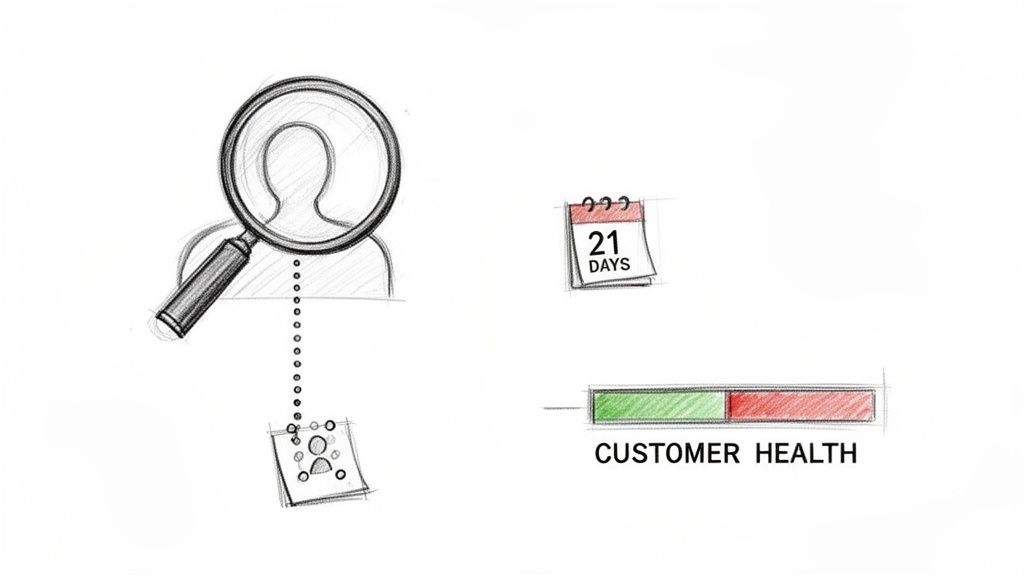
Then, things change. Over the past two weeks, the AI model detects that their login frequency has dropped by 50%. Even more telling, they haven't touched the reporting feature at all. The model instantly flags this account with a high churn-risk score and automatically notifies your customer success manager.
This warning shot comes 21 days before the account’s renewal date. Instead of being blindsided by a cancellation email, your team now has a three-week window to intervene. You can reach out with a personalized check-in, offer a quick training session on a new feature, or get to the bottom of any underlying issues. This proactive outreach is the key to saving the account and is a cornerstone of any strategy to reduce churn rate.
The dashboard below is a great example of how these at-risk accounts are surfaced, giving you a clear, prioritized view of where to focus.
This view turns a sea of raw data into a clear action plan, highlighting accounts with declining health scores long before they turn into lost revenue.
How AI Models Work with Privacy in Mind
A common—and totally valid—concern with tracking user activity is customer privacy. The good news is that modern churn prediction platforms are designed from the ground up to be privacy-first. For instance, a platform like LowChurn uses a read-only connection to your payment processor and never touches sensitive financial data or Personally Identifiable Information (PII).
The analysis is all about anonymized usage patterns and subscription metadata.
The goal is to understand what is happening, not who is doing it. By focusing on behavioral trends, AI can predict churn with over 85% accuracy without ever compromising your customers' privacy.
This approach builds trust in the system. Your team can confidently act on the health scores, knowing they are based on legitimate engagement signals, not intrusive data collection. If you're looking to dive deeper into this, you can explore a complete churn prediction model.
Ultimately, predicting churn isn't about spying on your customers. It's about understanding their needs and noticing when they're struggling. By identifying these moments of friction early, you can step in to help, turning a potential churn event into an opportunity to build a stronger, more loyal relationship.
Launching Targeted Campaigns to Save At-Risk Customers
Pinpointing an at-risk customer is a crucial first step, but it’s what you do next that actually saves revenue. A customer health score, on its own, doesn't reduce churn rate—a swift, targeted intervention does. This is where you shift from just analyzing data to taking decisive action, launching campaigns built to re-engage customers who are drifting away and remind them why they chose you in the first place.
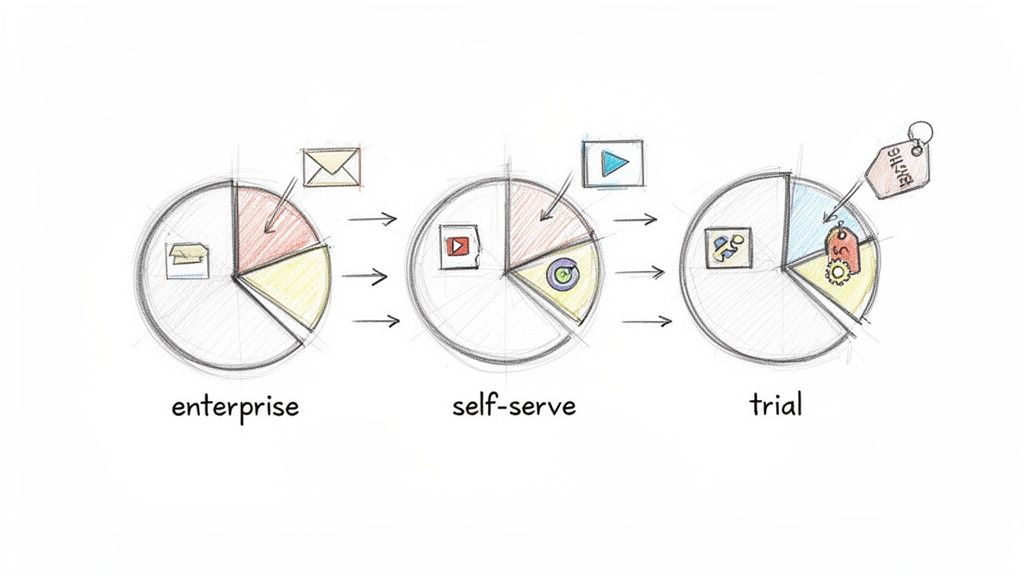
The biggest mistake I see teams make is using a one-size-fits-all approach. Your retention strategy has to be as nuanced as your customer base. An enterprise client whose health score is tanking needs a completely different touch than a self-serve user who hasn't logged in for a couple of weeks. The first might warrant a high-touch outreach from a dedicated account manager, while the second is a perfect candidate for an automated, personalized check-in email.
Building Your Retention Playbook
The most effective retention campaigns are triggered by specific churn signals. Instead of blasting out generic "we miss you" emails, your outreach should directly address the behavior that flagged the account. This simple act shows you're paying attention and lets you offer a genuinely helpful solution.
Here are a few practical playbooks I’ve seen work wonders, all tied to common churn signals:
Signal: Low Feature Adoption. A new user signs up but never touches a core, high-value feature.
- Campaign: Don't just sit on that data. Automatically send them a short, engaging video tutorial that showcases that exact feature. A few days later, follow up with an offer for a quick, 15-minute onboarding call to personally walk them through it.
Signal: Declining Usage. A previously active user's login frequency drops off a cliff.
- Campaign: Trigger a personalized email that highlights new features or product improvements they might have missed. You can frame it as a helpful update, not a desperate plea for them to come back.
Signal: Potential Downgrade. A customer on a premium plan stops using the features they're paying extra for.
- Campaign: Get in front of the problem. Proactively reach out with a special offer—maybe a temporary discount or exclusive access to a new beta feature—to reinforce the value of their current plan.
These kinds of automated, one-click campaigns, like the ones you can build in LowChurn, give even small teams the power to act decisively. You don't need a dedicated retention specialist to start saving at-risk MRR when the system itself can identify the problem and give you the tools to launch the solution instantly.
The best retention campaigns don't feel like marketing at all. They feel like outstanding customer service. They anticipate a customer's needs and offer a helpful solution at the precise moment of friction.
Segmenting for Maximum Impact
This is where the real magic happens. Segmentation is what separates truly effective retention efforts from spammy, tone-deaf emails. Your approach should change based on customer value, the specific churn signal they triggered, and where they are in their journey. A high-value account simply deserves a human touch, while you can manage smaller accounts efficiently with automated sequences.
Let's walk through a real-world scenario. Imagine your AI flags two at-risk accounts:
- Account A: An enterprise client paying $2,500/month. Their health score dropped because their main champion and a few other key stakeholders just left the company.
- Account B: A self-serve user paying $49/month. Their activity has cratered, and they haven’t adopted your latest feature.
Treating these two accounts the same would be a colossal waste of resources. Account A needs an immediate, personal call from a senior customer success manager to rebuild that relationship. Account B, on the other hand, is a perfect candidate for an automated email sequence that offers a video tutorial and a link to a help document. By segmenting, you focus your most valuable asset—your team’s time—where it will have the greatest financial impact.
And if you're looking for more ideas on winning back customers who have already churned, check out our guide on powerful customer win-back strategies. Many of the same principles of targeted, relevant outreach apply.
By pairing predictive health scores with a playbook of segmented, signal-based campaigns, you build a powerful system to systematically reduce churn rate. You finally stop being reactive and start proactively managing customer relationships at scale, turning potential losses into real opportunities for deeper engagement and long-term loyalty.
Turning Retention Insights into an Operational Rhythm
Fighting churn isn't a project you start and finish. It’s a constant rhythm, a process you weave into the very fabric of your business. The insights you pull from retention campaigns and customer health scores are pure gold, and they're too valuable to keep locked away in one department. When you embed these learnings into your daily workflows, you create a powerful feedback loop that builds real customer loyalty and sustainable growth.
The goal is to shift retention data from a dusty monthly report into a daily pulse check. Think of your dashboards as more than just campaign trackers; they are your real-time MRR health monitor. Making this data visible and accessible to everyone—from customer success to product—fosters a shared understanding of what makes customers stick around and what makes them leave.
Building a Cross-Functional Feedback Loop
The best churn reduction strategies happen when teams work together. The data you're collecting is a roadmap for better product features, smarter marketing, and more effective customer support.
Let’s say your retention dashboard uncovers something interesting: customers who skip a specific onboarding step are three times more likely to churn in their first 60 days. This is way more than just a problem for the CS team to handle reactively.
- For the Product Team: This is a huge red flag signaling a broken onboarding flow. They now have concrete data to prioritize a redesign of that step, making it more intuitive or even mandatory.
- For the Marketing Team: This insight can totally reshape their messaging. They can create content—blog posts, short videos—that specifically highlights the value of completing that step, educating users before they even sign up.
- For the Customer Success Team: Instead of firefighting, they can build a proactive playbook. Using a tool like LowChurn, they can set up an automated campaign that nudges users who miss this step, offering a quick walkthrough or a link to a helpful guide.
Just like that, a single data point sparks a company-wide effort to improve the entire customer journey.
From Data Points to Institutional Knowledge
Turning raw data into true institutional knowledge means having a clear process for sharing what you learn and, most importantly, acting on it. It’s about making retention a core part of your company's DNA.
Churn data isn't just a post-mortem on what went wrong. It's a blueprint for building a better product and a stronger customer relationship tomorrow. When you operationalize these insights, you stop plugging leaks and start reinforcing your foundation.
This shift isn't just a nice-to-have; it's critical. US companies lose a jaw-dropping $136 billion every year from customer churn that could have been prevented. For SaaS founders on Stripe, a massive 53% of churn comes from fixable problems like a clunky onboarding experience or a weak customer relationship. By making your insights actionable, you can tackle these root causes and slash churn by as much as 67%. These customer retention statistics really put the financial impact into perspective.
Setting Goals and Reporting Progress
To keep the momentum going, you need clear, realistic goals. Forget vague statements like "reduce churn." Get specific. A much better goal is, "reduce first-month churn by 15% in Q3" or "increase adoption of the new reporting feature among at-risk accounts by 20%."
Specific goals create accountability and are far easier to track. Reporting on them should be a regular, public ritual.
- Weekly Team Huddles: Spend five minutes reviewing active retention campaigns. What’s working? What isn’t?
- Monthly Business Reviews: Present a high-level view of churn trends, tying your retention work directly to key metrics like MRR and customer lifetime value (LTV).
- Quarterly Planning: Use the insights from the last 90 days to inform your product roadmap and CS priorities for the next quarter.
This rhythm of setting goals and reporting progress ensures that your efforts to reduce churn rate become more than a temporary fix. It transforms retention from a series of disconnected campaigns into a core, strategic function. A key part of this is understanding customer sentiment, which is why learning how to improve your NPS score with actionable strategies is essential. This holistic approach builds a culture where every team takes ownership of the customer experience, protecting your most valuable asset: your customer base.
Frequently Asked Questions About Reducing Churn
Even with a great strategy, you're going to have questions once you start putting a real churn reduction plan into action. I've heard a lot of them over the years, but a few pop up constantly. Here are the most common ones I hear from SaaS founders and their teams, along with some straightforward answers.
What Is a Good Churn Rate for a SaaS Business?
This is the classic question, and the honest answer is: it depends. But if you're looking for a general benchmark, a "good" monthly churn rate for most SaaS companies lands somewhere in the 3-5% range.
Now, if you're selling primarily to small businesses (SMBs), that number might creep up to 5-7% and still be considered healthy. SMBs are just a more volatile market by nature.
But the real holy grail isn't just a low churn rate; it's negative churn. That’s the magic point where the new revenue from your existing customers—think upgrades and add-ons—is greater than the revenue you lose from the customers who leave.
Don't get too hung up on a single industry number. The most important metric is your own trend line. If your churn rate is consistently going down, you're on the right track. That's the best sign of a healthy subscription business.
How Quickly Can I See Results from a Churn Reduction Platform?
You’d be surprised how fast things can move. Once you connect a dedicated platform to your payment processor, like Stripe, the initial heavy lifting is done almost immediately. We've seen systems generate accurate customer health scores within 24 to 48 hours.
The moment those scores are live, you can start targeting your most at-risk customers with retention campaigns. It’s not uncommon for teams to see a real, measurable drop in cancellations within the first few weeks. You're essentially catching the churn that was already about to happen.
The long-term value, of course, comes later. As you gather more data, you’ll uncover insights that help you fix the deeper issues in your onboarding, product, and customer experience.
Does Tracking User Activity for Churn Prediction Violate Customer Privacy?
This is a big one, and rightly so. The short answer is no, provided you're using a privacy-first tool. It's a non-negotiable.
Modern churn prediction platforms are built to work without ever touching sensitive data. They use a read-only connection to your payment system and completely ignore Personally Identifiable Information (PII) and financial details.
Instead, the analysis focuses on anonymized behavioral signals. Things like:
- How often a user logs in.
- Which core features they’re actually using (or not using).
- High-level subscription data like plan type and renewal dates.
This gives the AI everything it needs to accurately predict risk without ever crossing a privacy line. The goal is to understand behavioral trends at scale, not to snoop on individual users.
Ready to see exactly which customers are at risk of churning and get the playbooks to save them? LowChurn connects to your Stripe account in one click, giving you an AI-powered early warning system to protect your MRR. Start reducing your churn rate today.