For SaaS companies running on Stripe, growth isn't just about acquiring new customers; it's about keeping the ones you've worked so hard to win. High churn can silently erode your monthly recurring revenue (MRR), making sustainable growth feel like an impossible uphill battle. But what if you could turn the tide?
Effective SaaS customer retention strategies are not just defensive maneuvers. They are the most powerful engine for predictable, capital-efficient growth. They transform one-time buyers into lifelong advocates, significantly increase customer lifetime value (CLTV), and fortify your business against market volatility. Acquiring a new customer can cost five times more than retaining an existing one, and a mere 5% increase in customer retention can boost profitability by 25% to 95%. The math is clear: focusing on your existing customer base delivers an unparalleled return on investment.
This article moves beyond generic advice. We provide a prioritized roundup of 10 actionable strategies, specifically tailored for Stripe-based subscription businesses. You will gain a comprehensive playbook designed to protect your revenue and build a fiercely loyal customer base that champions your product.
We'll explore everything from:
- Leveraging predictive analytics to detect churn risk before it happens.
- Crafting onboarding experiences that create immediate, undeniable value.
- Building automated winback campaigns that recover lost MRR.
- Implementing customer success playbooks that drive engagement and adoption.
By the end of this guide, you'll have a clear, step-by-step framework for implementing powerful SaaS customer retention strategies that drive long-term, sustainable success.
1. Proactive Customer Success Management
Proactive customer success management is a foundational SaaS customer retention strategy that shifts the focus from reactive problem-solving to proactive value delivery. Instead of waiting for a support ticket or a cancellation notice, customer success managers (CSMs) engage with users throughout their lifecycle to ensure they continuously achieve their desired outcomes with your product. This approach treats retention as an ongoing process of partnership and goal alignment, not just a reaction to trouble.
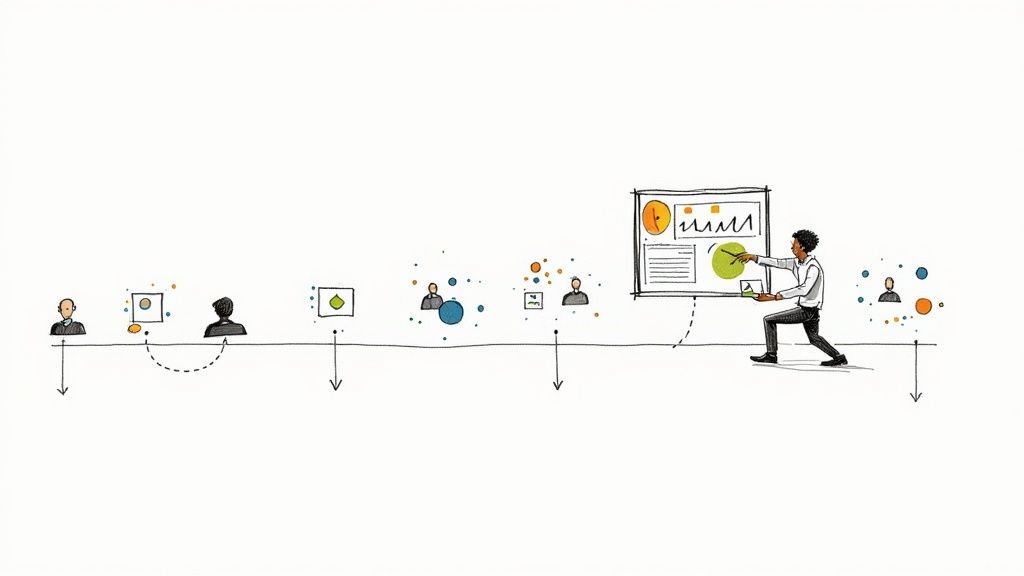
Pioneered by companies like Salesforce and Gainsight, this strategy transforms the customer relationship into a strategic asset. A CSM's role is to understand a customer's business objectives, guide them toward valuable features, and monitor their progress, effectively becoming a trusted advisor. This builds deep-seated loyalty and makes your SaaS indispensable.
How to Implement Proactive Customer Success
Implementing a proactive approach involves several key actions that anticipate customer needs and reinforce value.
- Establish Customer Health Scores: Create a scoring system based on product usage, support tickets, survey responses, and payment history. This allows CSMs to prioritize engagement with at-risk accounts before they churn.
- Schedule Quarterly Business Reviews (QBRs): For key accounts, conduct regular QBRs to review progress against their goals, demonstrate ROI, and plan for the future. This realigns your value proposition with their evolving business needs.
- Define Success Milestones: Work with customers during onboarding to define clear success criteria and key performance indicators (KPIs). Documenting these goals provides a roadmap for the entire relationship. For structured guidance on this, you can explore some effective customer success plan templates on lowchurn.com.
- Automate for Scale: For lower-tier customers, use automated email sequences triggered by specific usage patterns or milestones. This provides a sense of proactive engagement without requiring dedicated CSM resources for every account.
2. Personalized Onboarding and Implementation
Personalized onboarding and implementation is a critical SaaS customer retention strategy that moves beyond generic tutorials to guide new users to their first moment of value as quickly as possible. Instead of a one-size-fits-all welcome tour, this approach tailors the initial experience based on a customer's specific role, goals, and intended use case. This ensures users learn the features most relevant to them, accelerating product adoption and immediately demonstrating ROI.
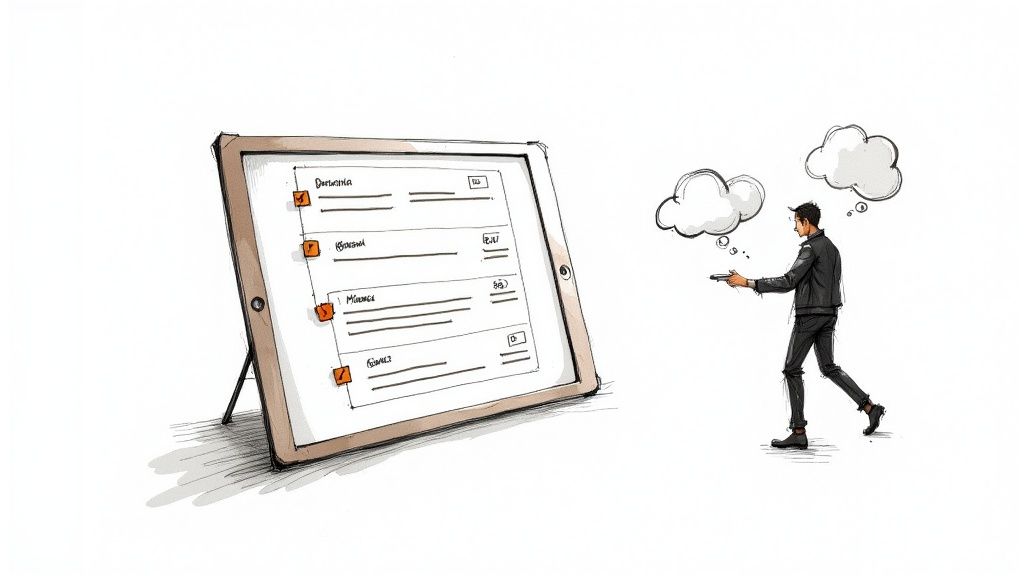
Popularized by product experience platforms like Appcues and Pendo, this strategy recognizes that a customer's long-term success is often determined within their first few sessions. Companies like Monday.com excel at this by using template-based onboarding that aligns the platform with the user's specific project needs from day one, whether for marketing campaigns or software development. This immediate alignment prevents early frustration and abandonment.
How to Implement Personalized Onboarding
Creating a personalized onboarding experience involves segmenting users and guiding them along customized paths to success. Effective onboarding is foundational to retention, ensuring new customers quickly realize value. Explore these 8 battle-tested user onboarding best practices for more in-depth guidance.
- Create Segmented Onboarding Paths: Use data from signup forms to categorize users by role, industry, or company size. Tailor the initial product tour and in-app messages to address the unique pain points of each segment.
- Establish "Aha!" Moment Milestones: Identify the key actions that lead a user to understand your product's core value. Structure your onboarding to guide every new user toward completing these actions within their first 30 days.
- Use Interactive, In-App Guidance: Replace lengthy video tutorials with interactive product tours and contextual tooltips that prompt users to take action. This hands-on approach promotes learning by doing.
- Provide Role-Specific Training Materials: Develop resources like help docs, webinars, and templates designed for different user personas, such as an administrator versus an end-user. This makes your content more relevant and actionable.
3. Product-Led Growth with Strong Retention Focus
Product-Led Growth (PLG) is a powerful go-to-market motion that uses the product itself as the primary driver of customer acquisition, expansion, and retention. Instead of relying solely on sales or marketing, a PLG strategy centers on delivering tangible value within the product experience, creating a self-reinforcing cycle of user engagement and loyalty. This makes it one of the most sustainable saas customer retention strategies available today.
Popularized by thought leaders at OpenView and embodied by companies like Slack and Figma, this approach ensures retention is baked directly into the product's design. The core principle is simple: if the product consistently helps users achieve their goals with minimal friction, they will naturally continue using it, upgrading, and advocating for it. The product experience becomes the most compelling reason to stay.
How to Implement a PLG Retention Strategy
Embedding retention into your product requires a deliberate focus on the user experience and immediate value delivery.
- Design for a Fast Time-to-Value: Engineer your onboarding flow so that new users experience the "aha!" moment and achieve a key outcome within minutes of signing up. Dropbox achieved this by making file sharing incredibly simple and immediate.
- Use Contextual In-App Guidance: Implement tooltips, interactive walkthroughs, and checklists to guide users toward high-value features they haven't discovered yet. This promotes deeper adoption and reduces the chance of users missing key functionality.
- Build for Collaboration and Virality: Design features that are inherently more valuable when used with others, like Figma's real-time design collaboration or Slack's channel-based communication. This creates network effects that increase switching costs and embed your product within team workflows.
- Leverage Usage Analytics: Track in-app behavior to identify patterns that correlate with long-term retention. Use this data to nurture users who are on the path to becoming power users and to re-engage those showing signs of disengagement with targeted in-app messages.
4. Comprehensive Community Building and User Engagement
Building a community is a powerful SaaS customer retention strategy that transforms your user base from isolated customers into an interconnected network. It fosters an environment where users can learn from each other, share best practices, and get peer-to-peer support, creating a powerful sense of belonging. This ecosystem deepens user investment in your product far beyond its core features, making it a central part of their professional identity and workflow.
Companies like HubSpot and Salesforce have pioneered this approach, demonstrating that an engaged community is a moat. Salesforce's Trailhead platform and HubSpot's INBOUND community are not just support channels; they are vibrant hubs for learning, career growth, and advocacy. When users feel connected to a community, they are significantly less likely to churn because they would be leaving behind not just a tool, but a valuable network.
How to Implement Community Building
Creating a thriving user community involves establishing dedicated spaces for interaction and programs that encourage active participation.
- Launch a Dedicated Community Platform: Start with an accessible platform like a Slack channel, Discord server, or a more structured forum solution like Circle. This creates a centralized "home" for your users to connect with each other and your team.
- Establish an Ambassador Program: Identify your most active and knowledgeable users and invite them into an ambassador or "super user" program. Reward them with early access to features, exclusive swag, and direct access to your product team. This empowers your best advocates.
- Host Regular, Value-Driven Events: Organize consistent webinars, expert Q&A sessions, workshops, or virtual networking events. These activities give users a reason to engage regularly and provide tangible value that reinforces their decision to stay with your product.
- Encourage User-Generated Content (UGC): Actively promote and celebrate content created by your users, such as tutorials, case studies, or templates. This not only scales your content efforts but also gives community members a sense of ownership and recognition.
5. Data-Driven Churn Prediction and Prevention
Data-driven churn prediction is a sophisticated analytics approach that moves beyond reactive retention measures. It involves using customer data, behavioral signals, and even machine learning to forecast which customers are at high risk of churning. This foresight allows you to intervene proactively with targeted, personalized efforts before a cancellation ever occurs, making it one of the most powerful SaaS customer retention strategies.
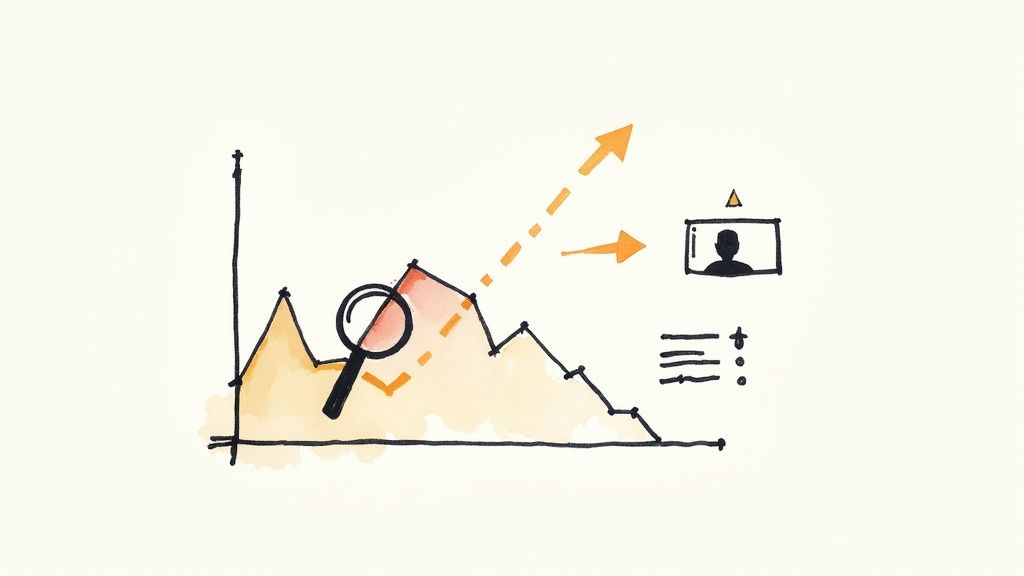
Pioneered by customer success platforms like Gainsight and made accessible through analytics tools like ChartMogul and Amplitude, this strategy turns historical data into a predictive asset. By identifying the subtle patterns that precede churn, such as a drop in login frequency or disuse of key features, you can prioritize outreach and deploy specific playbooks to re-engage at-risk accounts, effectively stopping churn in its tracks.
How to Implement Data-Driven Churn Prediction
Building a predictive model starts with identifying the right signals and creating a system for action.
- Identify Leading Churn Indicators: Start simple by tracking key metrics that signal declining engagement. These often include login frequency, usage of "sticky" features, number of support tickets filed, or recent payment failures.
- Combine Behavioral and Transactional Data: Create a holistic customer view by merging product usage data (from tools like Mixpanel) with subscription data from Stripe. This connection reveals how user behavior impacts revenue and churn.
- Establish Alert Thresholds: Define specific triggers for when an account is flagged as "at-risk." For instance, an account might be flagged if a user hasn't logged in for 14 days or if their feature usage drops by 50%. You can learn more about how to set up these systems by exploring customer churn prediction models.
- Develop Churn Intervention Playbooks: For a deeper dive into preventing customer attrition, explore a comprehensive proven retention playbook for reducing customer churn. This involves creating standardized responses for different churn risk scenarios, such as a personalized email from a CSM or an in-app offer for training.
6. Strategic Customer Feedback and Implementation Loops
Strategic customer feedback and implementation loops are a systematic process for collecting, analyzing, and acting on customer feedback to drive product development. This strategy goes beyond simply listening; it involves closing the loop by communicating back to customers how their input has shaped the product roadmap. This demonstrates a deep commitment to customer-centricity and makes users feel like valued partners in your journey.
Popularized by product-led companies like Figma and Notion, this approach transforms feedback from a simple support function into a core driver of growth and retention. When customers see their suggestions come to life, their investment in the product deepens, making them less likely to churn. This continuous cycle of feedback and improvement is one of the most powerful SaaS customer retention strategies for building an indispensable product.
How to Implement a Feedback and Implementation Loop
Creating a structured feedback loop requires clear processes and the right tools to ensure customer voices are heard and acted upon.
- Implement a Public Roadmap Tool: Use platforms like Canny or Productboard to create a public space where users can submit feature requests, vote on ideas, and track the status of suggestions. This provides transparency and centralizes feedback.
- Create Customer Advisory Boards (CABs): For your most strategic accounts, form a CAB to gather high-level feedback regularly. This gives key customers a direct line to your product and leadership teams, fostering strong partnerships.
- "Close the Loop" with Communications: When you release a feature based on customer feedback, proactively notify the users who requested it. A simple email saying, "You asked, we built it!" can have a massive impact on loyalty.
- Share Metrics on Feedback's Influence: Periodically share data with your user base, such as "This quarter, 40% of our product updates were directly inspired by customer feedback." This quantifies your commitment and reinforces the value of their contributions.
7. Sophisticated Pricing and Packaging Strategy
A sophisticated pricing and packaging strategy is one of the most powerful, yet often overlooked, SaaS customer retention strategies. It involves designing your pricing tiers not just around features, but around customer value, growth, and desired outcomes. This approach aligns your revenue model with your customers' success, creating natural expansion revenue and making it more logical for them to grow with you than to churn.
Popularized by pricing experts like Patrick Campbell of ProfitWell and executed flawlessly by companies like Slack and Stripe, this strategy moves beyond a simple "good, better, best" model. It builds clear upgrade paths that reward deeper product adoption. When a customer's usage or needs grow, your pricing structure should offer them a logical and valuable next step, effectively turning growth into a retention event.
How to Implement a Sophisticated Pricing Strategy
Implementing a value-aligned pricing model requires a deep understanding of your customer segments and the results they seek.
- Anchor Pricing to a Value Metric: Instead of charging solely per user, tie your pricing to a metric that directly correlates with the value customers receive. Examples include contacts for a CRM, projects for a project management tool, or data usage for an API service.
- Create Clear Upgrade Paths: Design your tiers so that as a customer's business matures, the next tier up is the obvious choice. This makes upgrading a natural progression rather than a painful decision, reducing the temptation to look for alternatives.
- Offer Annual Discounts: Encourage longer-term commitment and improve cash flow by offering a significant discount for annual prepayment. This locks customers in for a year, drastically reducing short-term churn risk and giving you more time to demonstrate value.
- Be Transparent About Limitations: Clearly communicate what is included in each tier. Hiding limitations or creating "gotcha" moments when a customer hits a usage wall erodes trust and can trigger churn. Transparency builds a healthier long-term relationship.
8. Continuous Value Demonstration and ROI Tracking
Continuous value demonstration is a powerful SaaS customer retention strategy centered on consistently proving the tangible return on investment (ROI) your product delivers. It moves beyond simply providing a service to actively communicating the specific business outcomes and financial benefits customers receive. This approach proactively justifies the subscription cost, transforming your SaaS from a line-item expense into an indispensable strategic asset.
Pioneered by enterprise SaaS leaders like Salesforce and HubSpot, this strategy involves quantifying the impact of your product on a customer’s key business metrics. By regularly showcasing how your solution saves time, cuts costs, or drives revenue, you reinforce its value and make renewal a logical, data-backed decision. This method is crucial for justifying price points and encouraging account expansion.
How to Implement Value Demonstration and ROI Tracking
Effectively demonstrating ROI requires a systematic approach to tracking and communicating value throughout the customer lifecycle.
- Develop ROI Calculators and Impact Reports: Create tools, like role-specific ROI calculators, that allow prospects and customers to quantify the potential and actual value they get. For key accounts, generate automated quarterly value reports that summarize their achievements and ROI, directly tying product usage to business outcomes.
- Track Product-Specific Metrics Tied to Business Goals: Identify the in-app actions that correlate most strongly with customer success (e.g., "reports generated," "time saved," "leads captured"). Present these metrics in customer-facing dashboards, translating product usage into clear business language.
- Integrate ROI into Renewal Conversations: Arm your customer success and sales teams with specific data points for each account. During renewal discussions, use executive summaries highlighting the quantified impact to shift the conversation from cost to value. This reinforces the investment and increases the customer lifetime value (CLV).
- Use Customer Success Stories with Quantified Results: Showcase the ROI achieved by other customers through case studies and testimonials. Highlighting specific, quantified results (e.g., "Company X increased efficiency by 30%") provides social proof and helps existing customers benchmark their own success.
9. Exceptional Customer Support and Education Programs
Exceptional customer support and education programs are more than just reactive problem-solving; they are a proactive retention engine. This strategy involves creating a comprehensive ecosystem where customers can find answers quickly, master the product, and feel supported at every turn. By empowering users with knowledge and providing fast, empathetic support, you reduce frustration, a primary driver of churn, and transform your service into a competitive advantage.
Companies like Zendesk and Intercom have built their entire brands around this principle. They demonstrate that when customers feel competent and heard, their loyalty deepens. An investment in robust support and education infrastructure directly translates into higher product adoption and customer lifetime value, making it one of the most effective SaaS customer retention strategies you can deploy.
How to Implement Exceptional Support and Education
Building a world-class support and education system requires a multi-faceted approach that caters to different learning styles and user needs.
- Implement Omnichannel Support: Offer support across multiple channels like live chat, email, and community forums. This ensures customers can get help in the format they prefer, reducing friction and wait times. Tools like Intercom excel at unifying these conversations.
- Build a Rich Knowledge Base: Create a comprehensive, easily searchable knowledge base filled with articles, FAQs, and step-by-step guides. A well-organized resource, like Slack's Help Center, empowers users to self-serve, resolving issues instantly without needing to contact an agent.
- Create Video Tutorials and Webinars: Develop a library of video content that addresses common use cases, feature walkthroughs, and best practices. Asana's Learning Center is a great example of this. Additionally, host regular live webinars to engage users and answer questions in real time.
- Launch a Certification Program: Establish a structured learning path with certifications, similar to the highly successful HubSpot Academy. This not only educates users on advanced features but also creates product evangelists and adds professional value for the individual, deeply embedding your tool into their workflow.
10. Strategic Expansion and Upsell Programs
Strategic expansion and upsell programs are powerful SaaS customer retention strategies that focus on increasing revenue from your existing customer base. Instead of treating retention as merely preventing cancellations, this approach actively seeks opportunities to deepen customer relationships by upselling premium features, cross-selling complementary products, or expanding user seats. This not only boosts revenue but also makes your product more integral to the customer's operations, significantly increasing their switching costs.
Pioneered by enterprise SaaS leaders like Salesforce and HubSpot, this strategy treats every account as a source of potential growth. When a customer expands their use of your product, they are signaling a deeper commitment and greater perceived value. This "negative churn," where expansion revenue exceeds lost revenue from churned customers, is a hallmark of highly successful and durable SaaS businesses. It turns retention from a defensive action into a proactive growth engine.
How to Implement Expansion and Upsell Programs
Implementing a systematic program requires identifying the right moments and triggers to present expansion opportunities, ensuring they align with the customer's success.
- Establish Expansion Triggers: Monitor product usage data to identify signals that a customer is ready for an upgrade. For example, consistently hitting a feature usage limit, frequent use of a specific workflow, or adding new team members are all strong indicators for a CSM to initiate an upsell conversation.
- Align Success Teams with Expansion Goals: Equip your customer success team with playbooks for different expansion scenarios. Tie their compensation or performance metrics not just to retention but also to net revenue retention (NRR), incentivizing them to proactively identify and close upsell opportunities.
- Integrate Upsells into the Customer Journey: Introduce expansion opportunities at natural points in the customer lifecycle. For instance, present premium features during quarterly business reviews (QBRs) or use in-app notifications to highlight a relevant add-on when a user completes a specific task.
- Create Tiered and Bundled Offerings: Structure your pricing and packaging to create a clear upgrade path. Bundle complementary products or create advanced tiers that solve the next logical problem for your power users, making the decision to expand feel like a natural progression.
Top 10 SaaS Customer Retention Strategies Comparison
| Strategy | Implementation complexity 🔄 | Resource requirements ⚡ | Expected outcomes 📊 | Ideal use cases | Key advantages ⭐ | Tips 💡 |
|---|---|---|---|---|---|---|
| Proactive Customer Success Management | High — continuous workflows, check-ins, health scoring | High — dedicated CSMs, monitoring & analytics | Reduce churn; higher adoption; upsell opportunities | Enterprise & high-ARPU accounts needing white‑glove care | Strong relationship-building; early risk detection | Prioritize via health scores; automate lower tiers |
| Personalized Onboarding and Implementation | Medium–High — tailored plans & role-based training | Medium — implementation specialists & content | Faster time‑to‑value; higher early adoption | Complex products or customers requiring setup support | Reduces support tickets; sets correct expectations | Segment onboarding; automate generic steps |
| Product-Led Growth with Retention Focus | Medium — product design, in-app education & flows | Low–Medium — product/design, analytics | Lower CAC; organic growth; high engagement | Self‑serve or viral products with simple UX | Scales efficiently; value shown quickly to users | Demo core value within minutes; use contextual tips |
| Comprehensive Community Building & Engagement | Medium — platform setup, moderation & programs | Medium — community managers, events budget | Peer support; advocacy; organic referrals | Products with engaged user bases or ecosystems | Lowers support load; builds loyalty & feedback loops | Recruit ambassadors; host regular events |
| Data-Driven Churn Prediction & Prevention | High — ML models, signal engineering & ops | High — data infrastructure, analysts, ML expertise | Targeted interventions; improved retention metrics | Large datasets; mid/enterprise SaaS with many signals | Cost‑effective targeting; early risk identification | Start with simple indicators; continuously validate models |
| Strategic Customer Feedback & Implementation Loops | Medium — multi-channel collection & governance | Medium — feedback tooling, product & research time | Improved product-market fit; stronger customer buy-in | Rapidly evolving products needing user input | Informs roadmap; increases customer ownership | Close the loop publicly; prioritize by impact |
| Sophisticated Pricing & Packaging Strategy | Medium–High — experiments, segmentation & billing | Medium — pricing analysts, sales alignment, testing | Higher ARPU; natural upsell; reduced early churn | Products with clear tierable value or usage variance | Aligns price to value; drives expansion | Test with cohorts; maintain transparent limits |
| Continuous Value Demonstration & ROI Tracking | Medium — dashboards, reports & periodic reviews | Medium — analytics, CSM time for reporting | Stronger renewal cases; measurable expansion signals | Enterprise buyers and ROI‑focused stakeholders | Shifts perception to investment; objective renewal evidence | Build role-specific ROI calculators; report regularly |
| Exceptional Customer Support & Education Programs | Medium — omnichannel support systems & KB | High — support staff, content production & training | Faster issue resolution; empowered users; lower churn | Broad user bases or mission-critical products | Builds trust; reduces friction; improves UX | Invest in searchable KB/videos; implement omnichannel support |
| Strategic Expansion & Upsell Programs | Medium — triggers, playbooks & account reviews | Medium — expansion sales, success alignment | Increased revenue per account; higher LTV | Products with seat-based usage or add-on features | Low-cost growth from existing customers; natural upgrades | Use usage triggers; align incentives across teams |
From Strategy to Action: Building Your Retention Flywheel
We've explored a comprehensive suite of ten powerful SaaS customer retention strategies, moving from proactive customer success and personalized onboarding to sophisticated pricing and data-driven churn prediction. Each strategy represents a critical lever you can pull to fortify your customer relationships, reduce churn, and build a more resilient, profitable subscription business. The common thread weaving through all of them is a fundamental shift in perspective: from reactive problem-solving to proactive value creation.
Retention isn't the responsibility of a single department; it's the outcome of a company-wide commitment to customer success. It’s about ensuring the value promised during the sales process is not only delivered but continuously amplified throughout the entire customer lifecycle. This is where the concept of a retention flywheel gains its power. Each positive interaction, each successful feature adoption, and each piece of implemented feedback adds momentum, making it easier to retain the next customer and the one after that.
Turning Insights into Impact
The journey from reading about these strategies to seeing them impact your bottom line requires a focused, iterative approach. It's easy to feel overwhelmed by the sheer number of possibilities, but the key is to avoid analysis paralysis. You don't need to implement all ten strategies overnight. Instead, identify the area of greatest opportunity for your business right now.
- Is your initial churn rate high? Start by laser-focusing on Personalized Onboarding and Continuous Value Demonstration to ensure new users reach their "aha!" moment quickly and consistently.
- Are you struggling with engagement from long-term users? Prioritize Community Building and Strategic Customer Feedback Loops to reinvigorate their connection to your product and brand.
- Do you feel like you're always one step behind customer issues? It's time to invest in Data-Driven Churn Prediction and Exceptional Customer Support Programs to get ahead of problems before they escalate.
The most successful SaaS businesses treat retention not as a defensive tactic but as their primary growth engine. Remember, acquiring a new customer can cost five times more than retaining an existing one. Furthermore, increasing customer retention by just 5% can boost profits by 25% to 95%. These aren't just vanity metrics; they represent the financial bedrock of a healthy, scalable SaaS company. For businesses built on Stripe, the data needed to power these initiatives is readily available; the challenge lies in activating it effectively.
Your Path to Sustainable Growth
Ultimately, mastering these SaaS customer retention strategies transforms your business model from a leaky bucket into a compounding growth machine. Happy, successful customers are not only less likely to churn; they become your most effective marketing channel through referrals and testimonials. They are also the most likely candidates for expansion revenue, upgrading their plans as their own needs grow.
This isn't just about saving revenue; it's about building a legacy. It's about creating a product that becomes indispensable and a company that customers are proud to partner with. The path forward is clear: choose a starting point from the strategies we've discussed, commit to executing it with excellence, and measure the results. Then, layer on the next strategy and the next, building your retention flywheel one deliberate action at a time. Your most valuable asset isn't your code or your marketing budget; it's the trust and loyalty of the customers you already have. Investing in their success is the most direct and sustainable path to your own.
Ready to move from reactive to proactive churn prevention? LowChurn connects directly to your Stripe account and product usage data, using AI to predict which customers are at risk of churning 7-30 days in advance. Stop guessing and start taking targeted action with a platform built to operationalize these advanced SaaS customer retention strategies.